

Skin Prick Test vs Blood Test: Choosing the Right Allergy Test
Both tests identify allergic triggers, but they suit different patients. Here is how a skin prick test and a specific IgE blood test compare, and how a consultant decides between them.
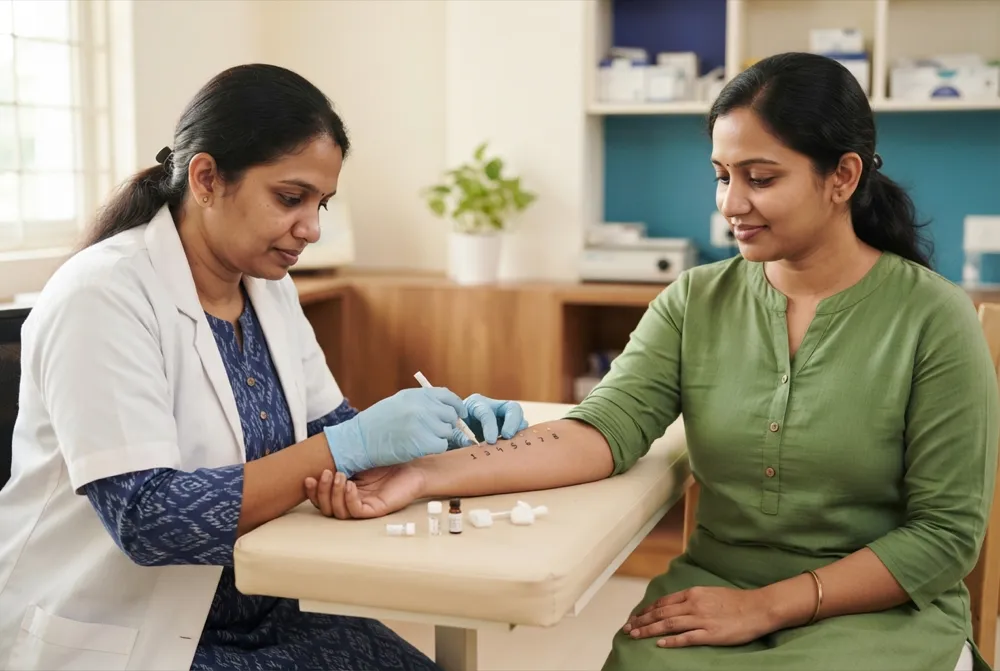
Once a doctor suspects that allergies are contributing to a patient's symptoms — whether that is a persistent runny nose, eczema, asthma or hives — the next question is usually which allergy test to do. The two most common options are a skin prick test and a blood test for specific IgE. Patients often ask which one is "better", but the honest answer is that they answer slightly different questions, and a consultant will usually recommend whichever is more appropriate for a particular patient rather than treating one as universally superior.
What a skin prick test involves
In a skin prick test, a tiny drop of each suspected allergen extract is placed on the forearm or back, and the skin underneath is gently pricked so a minute amount reaches just below the surface. Nothing is injected under the skin in the way an injection would be, and no blood is drawn. If the patient is allergic to that substance, a small, itchy raised bump — similar to a mosquito bite — appears at that spot within about fifteen to twenty minutes. A trained clinician measures the size of any reaction and compares it against a control, and results are usually ready and explained the same day.
Advantages of skin prick testing
- Results are available the same visit, with no waiting for a lab report.
- It can test for a wide panel of allergens — dust mite, pollen, pet dander, mould and certain foods — in a single sitting.
- It tends to be very sensitive, which makes it a good first-line test for most patients.
When it is not the right choice
A skin prick test needs intact, healthy skin to read properly, so it is not ideal during a severe eczema flare or widespread skin rash. Certain medicines, particularly antihistamines, need to be stopped for several days beforehand or they can mask a genuine reaction, which is not always practical for every patient. It also is not suitable for anyone with a history of a severe, whole-body allergic reaction to the substance being tested.
What a specific IgE blood test involves
A specific IgE test is a straightforward blood draw, sent to a laboratory, which measures the level of allergy-related antibody the immune system has produced against particular allergens. Because it does not involve exposing the skin to anything, it can be done regardless of skin condition and without stopping antihistamines beforehand, which makes it a practical option for patients already on regular allergy medication.
Advantages of a blood test
- Not affected by eczema, dermatographism or other skin conditions.
- Antihistamines and most other medicines do not need to be stopped first.
- Suitable for patients with a history of a severe reaction, where placing an allergen on the skin would carry more risk.
- A reasonable option for very young children or anyone who would find a skin test distressing.
What to keep in mind
A blood test usually takes a few days to come back, rather than the same visit, and can be marginally less sensitive than a skin prick test for some allergens. It is also generally a more expensive route if a very wide panel of allergens needs to be screened.
So which test is right for you?
In practice, a consultant chooses the test — or combination of tests — based on the individual patient, not a fixed rule:
- An adult or older child with normal skin, no history of severe allergic reactions and able to pause antihistamines for a few days is usually a good candidate for a skin prick test, because it is quick and highly informative.
- A patient with active eczema, a history of anaphylaxis, or one who cannot come off their regular antihistamines is often better served by a blood test.
- Some patients benefit from both — for example, a blood test to confirm a specific finding from a skin prick test, or the reverse, when the picture is not fully clear from one test alone.
Whichever test is used, the result on its own is only part of the picture. A raised reading to a particular allergen does not automatically mean that allergen is causing a patient's symptoms — it has to be interpreted alongside the history and examination by a clinician who knows the whole case. That review, and the plan that follows it, is really the point of the test, not the number itself.
What happens after testing
Once the relevant allergens are identified, the conversation moves to practical steps: reducing exposure where that is realistic, medication to control symptoms, and, for suitable patients, allergen immunotherapy — a structured, longer-term programme aimed at reducing sensitivity to a confirmed trigger rather than only controlling symptoms day to day.
If you have been living with unexplained sneezing, a skin condition that will not settle, or asthma that seems to flare in particular situations, proper allergy testing is often the step that turns vague self-management into a clear, targeted plan.
What to expect on the day
For a skin prick test, wearing something that allows easy access to the forearm makes the appointment quicker, and it helps to bring a list of every antihistamine, cold and cough remedy taken in the past week, since several of these can interfere with the reading. A blood test needs no special preparation at all, which is one of the reasons it suits busy adults and younger children who might find a clinic visit stressful. In both cases, the consultant reviews the result with you in the same appointment or at a prompt follow-up, explains what it does and does not mean for your specific symptoms, and sets out the next practical step — whether that is simple trigger reduction, medication, or a referral for allergen immunotherapy.
Testing in children
Both tests can be used in children, and age on its own is rarely a barrier. A blood test is often preferred for very young children or anyone likely to find a skin test upsetting, since it only needs a single blood draw rather than sitting still for the reading. Older children who are able to keep still for fifteen to twenty minutes generally tolerate a skin prick test well, and many find the same-day result reassuring rather than stressful, since it avoids the anxious wait for a lab report that a blood test involves.
This article is general patient information and does not replace a consultation. If you recognise these symptoms in yourself or your child, book an appointment so a clinician can assess your specific case.
Written by AAF Clinical Team and reviewed by the AAF clinical editorial team before publication.
Keep reading
Related health guides

Speak to a specialist, not a search bar.
Our consultants and general physicians are available for outpatient consultations, tele-triage and personalised risk reviews at every AAF centre.