
Condition we treat
Eczema & Skin Allergy
Patch testing for contact allergy and assessment of atopic dermatitis in children and adults.
Overview
About Eczema & Skin Allergy
The skin can react in more than one way. Atopic dermatitis (eczema) is a tendency to dry, itchy, inflamed skin that often runs alongside asthma and hay fever. Contact allergy is a separate problem in which the skin reacts where it has touched a specific substance. The two can occur together, and telling them apart changes the advice.
How they present
Atopic dermatitis
- Dry, rough skin that itches, often worse at night
- Red or darkened, sometimes weepy patches, typically in skin creases
- Flares and settled periods, with triggers such as heat, sweat, soap, wool and stress
Contact allergy
- A rash limited to where something touched the skin — a watch strap, footwear, a cosmetic, a metal fastening
- Itching and small blisters that appear a day or two after contact
How skin allergy is assessed
Examination and history
The pattern and location of the rash are often the biggest clue. We ask about products used on the skin, hobbies, work exposures and jewellery.
Patch testing
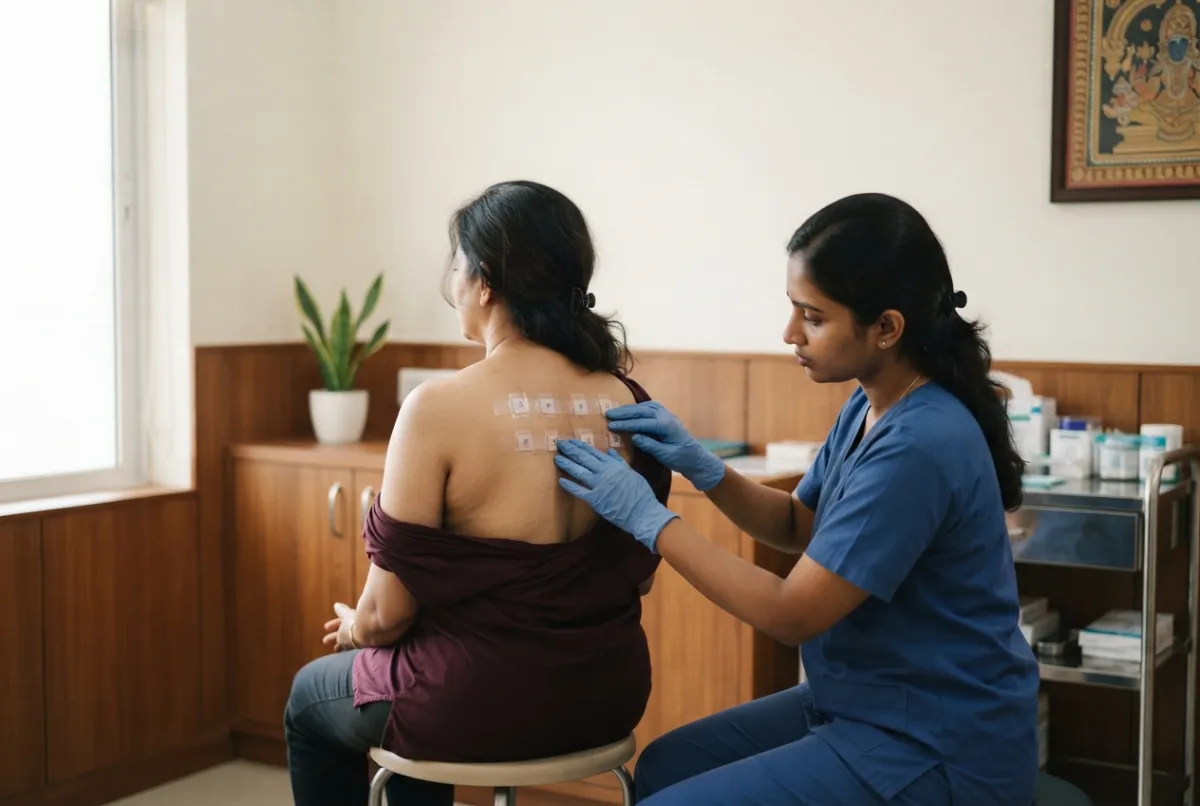
For suspected contact allergy, small amounts of standard test substances are applied to the upper back in panels and left in place. The skin is read after about 48 hours and again a day or two later to see which, if any, produce a reaction. This identifies substances to avoid.
Allergy testing for atopic dermatitis
Skin-prick or blood testing is sometimes used where an environmental or food trigger is suspected of driving difficult eczema, particularly in children.
Managing the skin
- Use a plain moisturiser generously and often, especially after bathing
- Wash with a soap substitute and lukewarm, not hot, water
- Use prescribed anti-inflammatory creams as directed during flares, then step down
- Once a contact allergen is identified, check product labels and remove it from your routine
- Keep nails short and consider cotton clothing next to the skin
When to book an appointment
See us if eczema is not settling with regular moisturiser and standard creams, if it keeps returning in the same spot suggesting contact allergy, if sleep or daily life is affected, or if the skin becomes painful, crusted or spreading, which can indicate infection.
This page is general information and not a substitute for a consultation. Symptoms overlap between conditions, so a clinician's assessment is the reliable way to know what is going on and what will help in your case.
Next steps
Diagnosis and treatment
A consultation, allergy testing where needed, and a treatment plan based on the results.
Talk to a specialist
Speak to the Thrissur team
Book a consultation, or ask our team about eczema & skin allergy and what to expect.
Helpline: +91 70125 46352